EPX3
The Research

What we claim, the research behind it, and where that research runs out.

We put the evidence in front of you before you have to ask for it. Some of it is strong. Some of it is mixed. One part of it, the promise that wellness programs save money, has not held up in the best trials, and we say so here. If a claim is not on this page, we do not make it.

How to read this page

Three questions for every finding

What the studies showThe result and the kind of study it came from.
How EPX3 uses itThe part of the 90-day program that rests on it.
The honest limitWhat the study does not show. Skeptics will look for this, so we state it first.
A note on Digital Sedentary Syndrome (DSS). DSS is a proposed clinical framework developed by Dr. Michael Majette. It is not an established medical diagnosis, and it is not recognized in the ICD or DSM. Its components are individually well documented; the framework and the EPX3 program built on it are being tested. The studies below support those components (prolonged sitting, short sleep, stress, low movement). They do not test DSS itself.
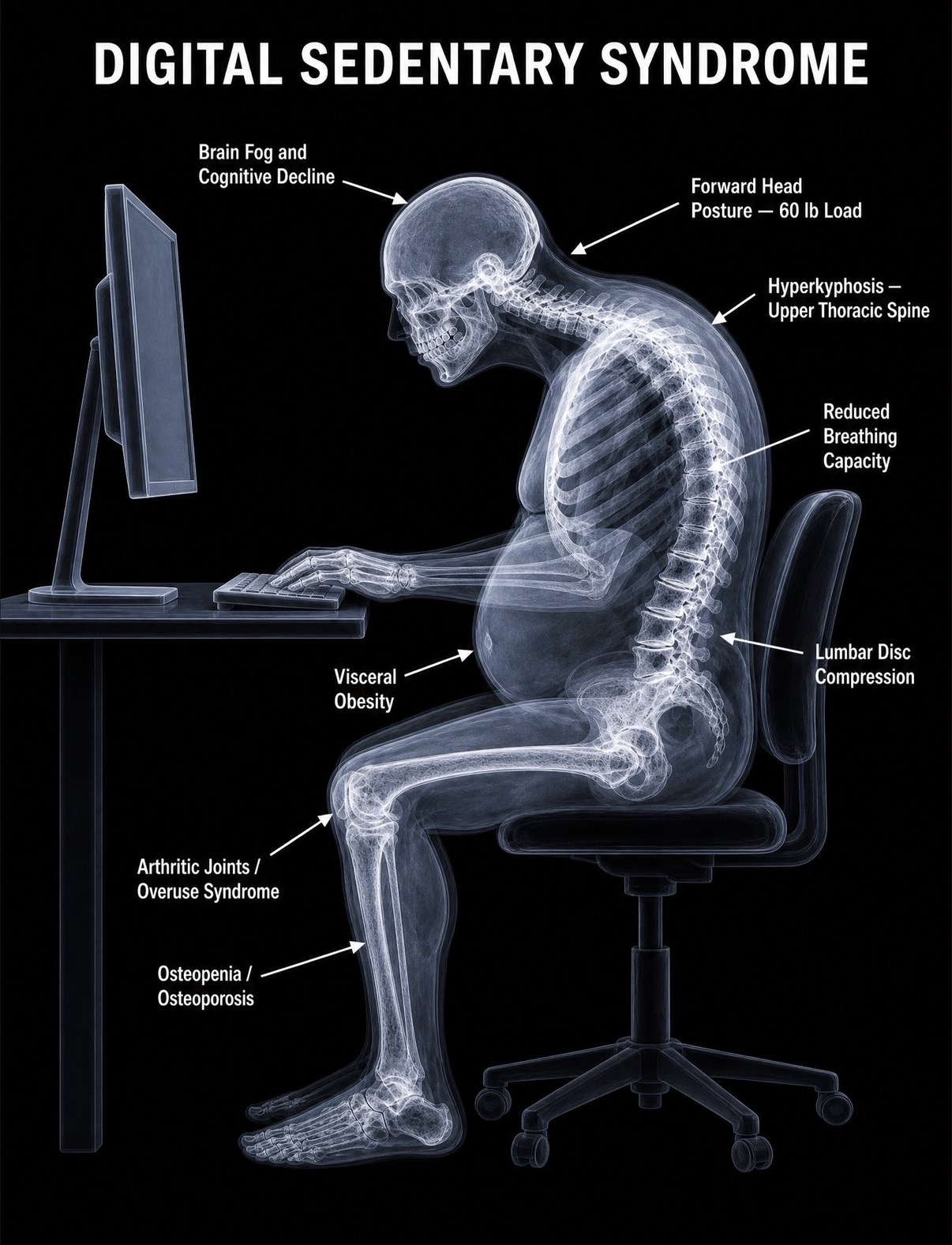
Illustration titled Digital Sedentary Syndrome: an X-ray-style rendering of a person slumped at a desk with labels for the problems the framework proposes are linked to prolonged sitting.
An artistic illustration of the framework, not a medical image or a real patient. Each label is an association from the research below, not a diagnosis.

1. Breaking up sitting is our best-supported tool

Strong in short-term trials

What the studies show

  • In a randomized crossover trial, a 5-minute light walk every 30 minutes was the only schedule that significantly reduced blood-sugar spikes, and every break schedule tested lowered systolic blood pressure compared with sitting without a break.1
  • A meta-analysis of randomized crossover trials found that interrupting sitting at intervals of 30 minutes or less worked better for glucose control than longer intervals (Hedges' g of −0.30, a modest effect with a wide range of uncertainty).2
  • Light walking beat simply standing for after-meal glucose and insulin.3 The American College of Sports Medicine endorses 3-minute activity breaks every 30 minutes for people with type 2 diabetes.4
  • In a cross-sectional study of 168 adults wearing accelerometers, people who broke up their sitting more often had smaller waists, lower BMI, lower triglycerides and lower 2-hour blood sugar, independent of total sitting time. That shows an association, not cause.64

How EPX3 uses it

The weekly physician-led accountability centers on short, frequent movement breaks that fit a working day, rather than one long workout. This is the spine of the program.

The honest limit

Most of this evidence is short-term and lab-based. A 3-month trial in postmenopausal women, run in real life, changed behavior but did not consistently improve blood sugar or HbA1c.5 We treat the short-term data as strong and the long-term, real-world data as still being built. That is why we measure.

2. Total sitting time carries its own risk

Well supported (observational)

What the studies show

  • Device-measured sedentary time was linked to higher cardiovascular risk. Risk for heart failure and cardiovascular death rose past about 10.6 hours of sitting a day, and the link remained among people who met the 150-minutes-a-week activity guideline.6,7
  • A large multi-country cohort tied more daily sitting time to higher mortality and cardiovascular events.8

How EPX3 uses it

We target sitting volume and how it is broken up, not only gym attendance. A person can exercise and still sit for most of the day.

The honest limit

These are observational studies. They show association, not proof that cutting sitting lowers an individual's risk, and they describe populations, not any one employee.

3. Mediterranean-pattern eating is the best-studied dietary layer

Well supported

What the studies show

  • Umbrella reviews and meta-analyses of trials and cohorts link a Mediterranean pattern to lower rates of cardiovascular disease, diabetes and metabolic syndrome.9,10,11
  • A 2026 meta-analysis of randomized trials found lower inflammatory markers (hs-CRP, IL-6 and IL-17).12
  • For brain outcomes, a 2025 review found that observational studies link healthy dietary patterns to cognitive benefits, but randomized trials have shown null or at best small effects.65 A systematic review of 13 studies (nine cohort, three cross-sectional, one randomized) found that closer adherence to the MIND diet went with better thinking scores in most of them.66

How EPX3 uses it

One-on-one coaching gives practical nutrition guidance built on this pattern. It is guidance and habit support, not a diet plan for a medical condition.

The honest limit

Not every inflammatory marker moved in that analysis, and long-term diets are hard to test in randomized trials. We do not present any single food change as a cure-all. For memory and dementia the evidence is mostly observational, so we make no claim that diet protects the brain.

4. Sleep: behavior change works, tips alone do not

Strong (for insomnia treatment)

What the studies show

  • Cognitive behavioral therapy for insomnia (CBT-I) is the guideline first-line treatment, with a large effect on insomnia severity (effect size 0.98).13
  • The American Academy of Sleep Medicine makes a conditional recommendation against "sleep hygiene" tips as a stand-alone treatment.14

How EPX3 uses it

Our sleep coaching is built on the parts that work: a consistent sleep schedule and stimulus control (for example, a screen curfew and keeping the bed for sleep), rather than a list of tips.

The honest limit

The strongest evidence is for people with diagnosed insomnia. EPX3 is not an insomnia treatment program. Anyone with persistent sleep problems is referred to their own physician.

5. Exercise supports focus, memory and mood

Well supported

What the studies show

  • An umbrella review of 133 reviews and 258,279 participants found that exercise improves general cognition (SMD 0.42), memory (0.26) and executive function (0.24), including at light intensity. The authors describe the effects as small to moderate.15
  • A meta-analysis found exercise interventions reduced depressive symptoms in middle-aged and older adults.16

How EPX3 uses it

This is the basis for treating mental energy as something trained through movement and routine, not just willpower.

The honest limit

The depression evidence comes from a specific age group and is about symptoms, not treatment of a clinical condition. EPX3 is not mental-health treatment. Anyone struggling is referred to appropriate care.

6. Fitness and daily movement track with living longer

Well supported (observational)

What the studies show

  • An American Heart Association scientific statement makes the case for measuring cardiorespiratory fitness as a clinical vital sign.21
  • A review of the evidence and a large cohort study link higher physical activity and higher cardiorespiratory fitness to lower all-cause and cardiovascular mortality, across age, race and sex groups.22,23
  • In a prospective study of 78,500 people, up to about 10,000 steps a day was associated with a lower risk of death and of cancer and cardiovascular disease.24
  • A review examined how much exercise is needed to reduce cardiovascular events, including at very high volumes.25

How EPX3 uses it

Fitness is one of the outcomes we measure at the start and again at 13 weeks, and the daily goals we coach are practical ones (steps and movement breaks), not athletic ones.

The honest limit

These are population associations. Fitter people may differ from less fit people in other ways, so the studies do not prove that raising one person's fitness will extend that person's life.

7. What swapping sitting time for movement or sleep may be worth

Supported (observational)

What the studies show

  • Two analyses of how people spend their 24 hours estimated differences in cardiometabolic markers when sitting time is replaced with physical activity, standing or sleep.26,27
  • A systematic review looked at interventions that reduce sedentary behaviour in adults with type 2 diabetes.28
  • A ten-year study followed changes in sedentary time, activity, fitness and cardiometabolic risk, and examined which associations held independently.29

How EPX3 uses it

We coach a swap, not an add-on: replace stretches of sitting with short movement and protect sleep, rather than asking busy people to find extra hours.

The honest limit

Substitution results are statistical estimates from observational data, not trials of actually swapping time. The diabetes review covers people with diabetes, who are a different group from most employees.

8. Combining several habits helps the brain a little, and structure helps more

Modest, well tested

What the studies show

  • In the US POINTER trial of 2,111 older adults (average age 68), thinking scores improved over two years in both groups. A structured program improved them slightly faster than a self-guided one, by 0.029 standard deviations per year.30
  • A Cochrane review found no evidence that multidomain lifestyle programs prevent dementia (based on two trials) and a small improvement in cognition.31
  • American Heart Association scientific statements describe the role of vascular health in brain health and cognitive impairment.32,33 A JAMA feature reviews the case that a large share of dementia cases may be preventable.34

How EPX3 uses it

These studies support combining several habits at once (movement, food, sleep, stress) and adding structure, such as coaching and weekly accountability, rather than handing people tips to follow alone.

The honest limit

The advantage of the structured program was small, and both groups improved. Participants were older adults, not working-age employees. EPX3 does not claim to prevent dementia or to treat any brain condition.

9. Real-world workplace programs: mixed results, and why it matters

Mixed

What the studies show

  • A randomized field experiment of the Live Healthy, Work Healthy program found improvements in work-related quality of life, attitudes toward the organization and work engagement.35
  • At an academic health center, employees who completed a wellness program reported improvements in patient-reported health outcomes, job satisfaction (up 4.4 percentage points) and self-reported productivity.36
  • A cluster randomized trial of an integrated workplace program did not improve employees' lifestyle. The authors point to short exposure to the activities and poor implementation.37
  • A meta-analysis found that presenteeism results vary with how presenteeism is measured and with employees' chronic health.38
  • A review of the cost of insufficient and disturbed sleep put the added cost to employers at US$322 to US$1,967 per employee.39

How EPX3 uses it

We measure presenteeism and engagement and state the method used, so a number can be judged on how it was collected. We design for strong implementation: weekly contact rather than a one-time event.

The honest limit

The academic health center study compared employees who completed a program and was not randomized. The sleep cost figures are estimates, and we do not promise savings. Two trials are still in progress, so their results are not yet available.44,45

10. It is not too late to improve the markers

Encouraging, early

What the studies show

  • A meta-analysis of 24 randomized trials found that combined aerobic and resistance training lowered fasting glucose, fasting insulin, insulin resistance (HOMA-IR), TNF-α and C-reactive protein in sedentary adults without diabetes. It found no significant effect on HbA1c, adiponectin, leptin or IL-6.40
  • A systematic review found that injury-reduction programs that included neck exercises reduced sport-related head and neck injuries, including concussion, in four intervention studies.41
  • In 93,060 US veterans who each completed two treadmill tests, a change of about one MET or more in fitness went with a matching change in death risk, up or down, whatever the starting fitness.67
  • An American Heart Association statement summarizes trials in adults with overweight or obesity: exercise training lowered resting systolic blood pressure by about 3 mmHg and insulin resistance (HOMA-IR) by 0.34, and by 0.50 in type 2 diabetes. It also notes that exercise alone rarely produces clinically meaningful weight loss.68
  • In a 12-month randomized trial of 424 older adults at risk of disability, moderate physical activity led to lower interleukin-6: at 12 months it was about 8.5% higher in the health-education group than in the activity group. C-reactive protein did not differ significantly.69
  • In a cross-sectional comparison of 51 healthy adults, the sedentary group had worse insulin resistance and higher TNF-α and hsCRP than active groups, and higher VO2max tracked with better values.70

How EPX3 uses it

People who have sat for years are not written off. A mix of aerobic and strength work is part of the coaching, and we measure what changes at 13 weeks.

The honest limit

The inflammation results rest on few studies with considerable variation between them. The neck-exercise studies were in athletes, so we make no claim about desk workers, and a narrative review of neck strength and concussion also says the best dose is not yet known.71 The veterans were VA patients, so results may not apply to everyone, the fitness-and-inflammation comparison had 17 people per group, and the blood-pressure and insulin figures come from adults with overweight or obesity. EPX3 does not treat or prevent concussion.

11. AI as a coach's assistant, not a replacement

Early evidence

What the studies show

  • In a randomized trial of 102 Japanese office workers, positive feedback from a ChatGPT-based chatbot raised occupational self-efficacy. Critical feedback helped only for people who felt strongly supported by their supervisors and colleagues.42
  • A systematic review of AI-based interventions for workplace mental health evaluated their effectiveness, acceptability and scalability. The authors conclude that AI interventions may offer flexible, adaptive solutions, with strong engagement indicators.43
  • A scoping review of 21 studies of AI tools for healthcare workers' well-being reported benefits such as less stress, burnout and musculoskeletal pain, alongside short studies, privacy and ethics concerns, and uneven staff uptake.72

How EPX3 uses it

AI supports the human coaching and gives leaders practical AI skills. It does not replace the physician or the coach, and it does not make clinical decisions.

The honest limit

The trial was small, from one country, short-term and self-reported. The review describes an early evidence base. We read all three as promising for engagement and not yet proof of health outcomes.

12. Strength and stability work for the neck and back

Promising, mixed

What the studies show

  • A review of 54 workplace studies (36 of them randomized) in workers with physically demanding jobs and existing pain found strong evidence that workplace strength training reduces musculoskeletal problems. It found strong evidence of no benefit from participatory ergonomics programs, multi-part programs or stress management.46
  • In a cluster-randomized trial of 484 office workers who started without neck pain, a 12-week neck and shoulder strengthening program (20 minutes, three times a week) was followed by neck pain in 10% of the exercise group at 12 months versus 20% of a health-education group (adjusted odds ratio 0.46, 95% confidence interval 0.21 to 1.01).47
  • A network meta-analysis of 18 randomized trials (950 people with existing non-specific neck pain) found that several stability and strengthening programs lowered pain more than self-directed exercise, with no clear winner on disability scores.49
  • A Cochrane review of ten studies (955 workers) could not show that sit-stand desks, activity trackers or multi-part programs reduced back or neck symptoms.50
  • In an experiment with 18 sedentary employees, trunk stability exercises and diaphragmatic breathing restored balance measures faster after induced core-muscle fatigue than foam rolling or lying down.51

How EPX3 uses it

Coaching includes short, progressive strength and stability work for the neck, shoulders and trunk, because that is the ingredient with the most support. We do not rely on equipment changes alone.

The honest limit

The 54-study review covers physically demanding jobs, not desk work. The office-worker trial was labeled exploratory by its authors and just missed the usual statistical threshold (p=0.05, interval includes 1). In a companion analysis of the same trial, the pain reduction seen at 12 weeks was gone at 12 months, and roughly one in five or fewer of the exercise group were still exercising regularly.48 The neck pain analysis rates its certainty as generally low. The 18-person study was a short lab experiment and showed no difference 15 minutes later. We do not claim EPX3 prevents or treats neck or back pain.

13. Phones, notifications and attention

Small effects, still debated

What the studies show

  • A review of the media multitasking research found that heavier multitaskers often do worse on tasks that need sustained attention, but many studies find no difference, and the direction of cause and effect is unknown.52
  • The largest study to date (1,511 people aged 7 to 70) found that more everyday technology multitasking went with better scores on a lab multitasking test up to about age 29. The link was not seen at older ages.53
  • In a lab experiment, people answered about 3 milliseconds slower on trials paired with smartphone notification sounds than with control sounds, a very small effect. The authors describe their results as adding to an ongoing debate.54
  • One small experiment (about 40 adults aged 20 to 34) found lower attention scores when a phone was simply present on the desk. The idea comes from a 2017 experiment that a later replication attempt failed to reproduce.55
  • A review of smartphone and cognition research found the evidence still limited and uneven across attention, memory and self-control.56
  • In a pre-registered randomized field experiment (112 people), a grayscale-screen setting cut measured screen time, but reducing screen time had no immediate effect on well-being or academic performance.57

How EPX3 uses it

Mental-energy coaching treats notifications and constant task-switching as habits to test, for example batching alerts and protecting focus blocks, and then asks the person whether it helped. We make no claim that phone use damages the brain.

The honest limit

Most of these are short lab experiments, often in students and young adults, with tiny effects and mixed replication. The field experiment was small and short. None of this is evidence of lasting harm, and it does not support claims about attention spans, which is why we make none.

14. Sleep, health and the hidden cost of lower performance at work

Supported (observational)

What the studies show

  • In a US survey of 7,428 employed adults, insomnia was linked to the equivalent of 7.8 lost workdays a year of reduced on-the-job performance after accounting for other health conditions, valued at $2,280 per worker. It was not significantly linked to absence.58
  • Smartphone sleep data from 79,048 working adults in Japan linked both short and long sleep, later sleep timing, social jet lag and longer time to fall asleep to higher self-rated productivity loss. The best scores were at about 6 to 9 hours.59
  • In a lab experiment with 15 young men on five nights of 5-hour sleep, people who lapsed more after sleep restriction showed less improvement on working-memory and visuospatial tasks than people who lapsed less. Vulnerability varied widely between individuals.60
  • In a survey of 516 workers, those with chronic disease had 6.34 times the absenteeism and 2.36 times the presenteeism of matched peers without it.61
  • In a US productivity audit, 81% of the lost-time cost of depression came from reduced performance while at work, not from absence.62 A meta-analysis found that how presenteeism is measured can change the results.38
  • The American College of Occupational and Environmental Medicine published guidance supporting lifestyle medicine in occupational practice, covering sleep, activity, nutrition and mental well-being.63

How EPX3 uses it

We measure sleep regularity and presenteeism at the start and at 13 weeks, state the method we used, and report group results conservatively. We do not turn these dollar estimates into a promise of savings.

The honest limit

All of this is observational or experimental on small groups, so none of it shows that a program recovers these costs. The $2,280 is a modeled estimate for diagnosed insomnia, not for ordinary short sleep. The chronic-disease survey is one site using self-report. The depression audit used 2001 and 2002 data. The ACOEM statement is expert guidance, not trial evidence.

15. What workplace wellness trials have not shown

Where the evidence pushes back

What the studies show

  • Large randomized trials of comprehensive workplace wellness programs found improved self-reported health behaviors but no significant change in clinical biometrics, health spending, absenteeism or job performance at 18 months.17,18
  • The same pattern held at up to three years of follow-up.19
  • A systematic review of physical-activity-based worksite programs was more favorable, on fitness and work ability.20

How EPX3 uses it

We do not promise savings, a return multiple, lower premiums or a productivity gain. We measure the outcomes the research suggests can actually move, and we report what changed, including when little did.

Why this builds trust

Most vendors skip this finding. We would rather you hear it from us, and judge the program on measured results from your own people.

16. Desk jobs, truck drivers and sitting at work

Well supported (observational)

What the studies show

  • In a NIOSH survey of 1,670 long-haul truck drivers (2010), 68.9% were obese versus 30.5% of US workers, 14.4% had diabetes versus 6.8%, and 51% smoked versus 19%. 88% had at least one of high blood pressure, smoking or obesity, versus 54%. High blood pressure was 26.3% versus 24.1%, a difference that was not statistically significant.73
  • In 481,688 adults followed an average of 12.85 years, people who mostly sat at work had a 16% higher risk of death from any cause (HR 1.16) and a 34% higher risk of death from cardiovascular disease (HR 1.34) than people who mostly did not. People who alternated sitting and not sitting had no increase (HR 1.01). Adding 15 to 30 minutes a day of leisure activity was linked to risk similar to that of inactive people who did not sit at work.74
  • A pooled review found that, for the most sedentary people compared with the least, the hazard ratio was 1.24 for death from any cause, 1.18 for cardiovascular death, 1.17 for cancer death, 1.14 for new cardiovascular disease and 1.91 for type 2 diabetes. Risks were smaller at higher activity but not erased.75 A separate analysis of 1,005,791 people found that about 60 to 75 minutes a day of moderate activity removed the extra risk linked to sitting 8 or more hours.76
  • In 1953, Dr. Jeremy Morris reported that London bus drivers had more coronary heart disease than the conductors who climbed stairs all day.77 The 2024 heart-journal study of 89,530 UK adults is covered in section 2.

How EPX3 uses it

These findings support the "desk driver" comparison on the home page, and our focus on sitting at work and on short, frequent movement. The home-page ladder is an educational illustration built from these group results. It does not diagnose anyone or forecast any one person's future.

The honest limit

All of this is observational: it shows links in groups, not proof of cause for an individual. Driver risk comes from smoking, weight and sleep as well as sitting, so the comparison does not show that sitting alone caused it. Drivers did not have significantly more high blood pressure, so we do not claim they do. A widely repeated claim that long-haul drivers die 10 to 16 years earlier could not be traced to a study, so we do not use it. Experts still disagree about how much activity fully offsets sitting.

17. AI at work: skills, jobs and the evidence that pushes back

Mixed, still early

What the studies show

  • When 5,179 customer-support agents were given an AI assistant, productivity (issues resolved per hour) rose about 14% on average and about 34% for novice and lower-skilled workers, with minimal effect for experienced workers.78
  • In an experiment with 758 consultants, those using AI on tasks inside its strengths completed about 12.2% more tasks, about 25.1% faster, at over 40% higher quality. On a task outside its strengths, those using AI were 19 percentage points less likely to produce a correct answer.79
  • An analysis of over one billion job ads in 27 countries found an average pay premium of 62% for AI skills. Headcount from 2018 to 2025 grew 52% at the most AI-exposed companies and 36% at the least exposed.80
  • Employers surveyed for the World Economic Forum expect 170 million new jobs and 92 million lost by 2030, a net gain of 78 million, with nearly 40% of skills changing. 41% plan to reduce their workforce because of AI and 77% plan to upskill.81
  • In US payroll data, workers aged 22 to 25 in the most AI-exposed occupations saw employment fall about 13% relative to others. Employment for more experienced workers in the same occupations stayed stable or grew, and losses were concentrated where AI is more likely to automate than to augment work.82
  • In a Pew survey of 5,273 US workers (October 2024), 52% were worried about future AI use at work and 32% expected fewer job opportunities for themselves.83 In a Gallup survey of 23,717 US employees (February 2026), 50% used AI at work at least a few times a year and 18% said it was likely their job would be eliminated within five years (23% in organizations adopting AI).84

How EPX3 uses it

Layer 3 of the protocol includes a Weekly AI Win. Leaders get a session on using AI. We teach three habits: ask clearly, check the answer, and protect private information. Everyone who finishes the 90 days is offered the G.A.I.N.S. AI certification. The message is to learn to direct and check AI, not to fear it or to trust it blindly.

The honest limit

The productivity studies cover specific jobs (customer support and consulting) and may not carry over to yours. The pay and headcount figures are associations, not proof that AI skills cause raises or growth. The World Economic Forum numbers are employer forecasts. The payroll study is early and suggests young workers in automatable jobs are already affected. No study can say what will happen to any one worker, and EPX3 does not promise job security, raises or promotions.

What we measure

The outcomes the evidence says can move

Every participant is measured at the start and again at 13 weeks. Employers see group results only, and only for groups of ten or more.

MeasureWhy we chose it
Work ability (self-reported)The outcome where worksite physical-activity programs look most favorable.20
FitnessA direct, objective change that does not depend on a survey answer.
Longest unbroken sitting boutInterruption of sitting is the strongest-supported lever.1,2
Sleep regularitySleep scheduling is the part of behavioral sleep treatment that works.13,14
Presenteeism and engagement (self-reported)Results depend on how these are measured, so we name the method with every number.38
Energy and pain (self-reported)What employees and HR actually notice day to day. Reported as anonymous group results.
What we do not measure or promise: health spending, insurance premiums, absenteeism savings, or a return multiple. The best trials did not find movement there, so we do not claim it.
References

The studies, with links

Links go to each paper through its DOI. These summaries describe populations, are not medical advice, and are not a promise of any individual result. Found an error? Tell us at drmike@myjetmedical.com and we will correct it.

  1. Duran AT, Friel CP, Serafini MA, et al. Breaking up prolonged sitting to improve cardiometabolic risk: dose-response analysis of a randomized crossover trial. Med Sci Sports Exerc. 2023;55(5):847-855. doi:10.1249/MSS.0000000000003109
  2. Yin M, Xu K, Deng J, et al. Optimal frequency of interrupting prolonged sitting for cardiometabolic health: a systematic review and meta-analysis of randomized crossover trials. Scand J Med Sci Sports. 2024;34(12):e14769. doi:10.1111/sms.14769
  3. Buffey AJ, Herring MP, Langley CK, Donnelly AE, Carson BP. The acute effects of interrupting prolonged sitting time in adults with standing and light-intensity walking on biomarkers of cardiometabolic health: a systematic review and meta-analysis. Sports Med. 2022;52(8):1765-1787. doi:10.1007/s40279-022-01649-4
  4. Kanaley JA, Colberg SR, Corcoran MH, et al. Exercise/physical activity in individuals with type 2 diabetes: a consensus statement from the American College of Sports Medicine. Med Sci Sports Exerc. 2022;54(2):353-368. doi:10.1249/MSS.0000000000002800
  5. Hartman SJ, LaCroix AZ, Sears DD, et al. Impacts of reducing sitting time or increasing sit-to-stand transitions on blood pressure and glucose regulation in postmenopausal women: three-arm randomized controlled trial. Circulation. 2025;152(8):492-504. doi:10.1161/CIRCULATIONAHA.124.073385
  6. Ajufo E, Kany S, Rämö JT, et al. Accelerometer-measured sedentary behavior and risk of future cardiovascular disease. J Am Coll Cardiol. 2025;85(5):473-486. doi:10.1016/j.jacc.2024.10.065
  7. Mi MY, Perry AS, Krishnan V, Nayor M. Epidemiology and cardiovascular benefits of physical activity and exercise. Circ Res. 2025;137(2):120-138. doi:10.1161/CIRCRESAHA.125.325526
  8. Li S, Lear SA, Rangarajan S, et al. Association of sitting time with mortality and cardiovascular events in high-income, middle-income, and low-income countries. JAMA Cardiol. 2022;7(8):796-807. doi:10.1001/jamacardio.2022.1581
  9. Guasch-Ferré M, Willett WC. The Mediterranean diet and health: a comprehensive overview. J Intern Med. 2021;290(3):549-566. doi:10.1111/joim.13333
  10. Dinu M, Pagliai G, Casini A, Sofi F. Mediterranean diet and multiple health outcomes: an umbrella review of meta-analyses of observational studies and randomised trials. Eur J Clin Nutr. 2018;72(1):30-43. doi:10.1038/ejcn.2017.58
  11. Muscogiuri G, Maiorino MI, Paolini B, et al. Mediterranean diet for the primary prevention of cardiometabolic diseases: evidence from a systematic review and meta-analysis featured in the Italian National Guidelines. Nutrition. 2026;148:112947. doi:10.1016/j.nut.2025.112947
  12. Keshani M, Rafiee S, Heidari H, et al. Mediterranean diet reduces inflammation in adults: a systematic review and meta-analysis of randomized controlled trials. Nutr Rev. 2026;84(9):1776-1790. doi:10.1093/nutrit/nuaf213
  13. Morin CM, Buysse DJ. Management of insomnia. N Engl J Med. 2024;391(3):247-258. doi:10.1056/NEJMcp2305655
  14. Edinger JD, Arnedt JT, Bertisch SM, et al. Behavioral and psychological treatments for chronic insomnia disorder in adults: an American Academy of Sleep Medicine clinical practice guideline. J Clin Sleep Med. 2021;17(2):255-262. doi:10.5664/jcsm.8986
  15. Singh B, Bennett H, Miatke A, et al. Effectiveness of exercise for improving cognition, memory and executive function: a systematic umbrella review and meta-meta-analysis. Br J Sports Med. 2025;59(12):866-876. doi:10.1136/bjsports-2024-108589
  16. Zhang Z, Liu JY, Zhu KT, Huo GQ. A meta analysis and systematic review of the effects of exercise interventions on middle-aged and elderly patients with depression. PLoS One. 2025;20(1):e0303594. doi:10.1371/journal.pone.0303594
  17. Song Z, Baicker K. Effect of a workplace wellness program on employee health and economic outcomes: a randomized clinical trial. JAMA. 2019;321(15):1491-1501. doi:10.1001/jama.2019.3307
  18. Reif J, Chan D, Jones D, Payne L, Molitor D. Effects of a workplace wellness program on employee health, health beliefs, and medical use: a randomized clinical trial. JAMA Intern Med. 2020;180(7):952-960. doi:10.1001/jamainternmed.2020.1321
  19. Song Z, Baicker K. Health and economic outcomes up to three years after a workplace wellness program: a randomized controlled trial. Health Aff (Millwood). 2021;40(6):951-960. doi:10.1377/hlthaff.2020.01808
  20. Marin-Farrona M, Wipfli B, Thosar SS, et al. Effectiveness of worksite wellness programs based on physical activity to improve workers' health and productivity: a systematic review. Syst Rev. 2023;12(1):87. doi:10.1186/s13643-023-02258-6
  21. Ross R, Blair SN, Arena R, et al. Importance of assessing cardiorespiratory fitness in clinical practice: a case for fitness as a clinical vital sign: a scientific statement from the American Heart Association. Circulation. 2016;134(24):e653-e699. doi:10.1161/CIR.0000000000000461
  22. Kraus WE, Powell KE, Haskell WL, et al. Physical activity, all-cause and cardiovascular mortality, and cardiovascular disease. Med Sci Sports Exerc. 2019;51(6):1270-1281. doi:10.1249/MSS.0000000000001939
  23. Kokkinos P, Faselis C, Samuel IBH, et al. Cardiorespiratory fitness and mortality risk across the spectra of age, race, and sex. J Am Coll Cardiol. 2022;80(6):598-609. doi:10.1016/j.jacc.2022.05.031
  24. Del Pozo Cruz B, Ahmadi MN, Lee IM, Stamatakis E. Prospective associations of daily step counts and intensity with cancer and cardiovascular disease incidence and mortality and all-cause mortality. JAMA Intern Med. 2022;182(11):1139-1148. doi:10.1001/jamainternmed.2022.4000
  25. Eijsvogels TM, Molossi S, Lee DC, Emery MS, Thompson PD. Exercise at the extremes: the amount of exercise to reduce cardiovascular events. J Am Coll Cardiol. 2016;67(3):316-329. doi:10.1016/j.jacc.2015.11.034
  26. Farrahi V, Rostami M, Nauha L, et al. Replacing sedentary time with physical activity and sleep: associations with cardiometabolic health markers in adults. Scand J Med Sci Sports. 2023;33(6):907-920. doi:10.1111/sms.14323
  27. Brakenridge CJ, Koster A, de Galan BE, et al. Associations of 24 h time-use compositions of sitting, standing, physical activity and sleeping with optimal cardiometabolic risk and glycaemic control: the Maastricht Study. Diabetologia. 2024;67(7):1356-1367. doi:10.1007/s00125-024-06145-0
  28. Smith S, Salmani B, LeSarge J, et al. Interventions to reduce sedentary behaviour in adults with type 2 diabetes: a systematic review and meta-analysis. PLoS One. 2024;19(7):e0306439. doi:10.1371/journal.pone.0306439
  29. Knaeps S, Bourgois JG, Charlier R, et al. Ten-year change in sedentary behaviour, moderate-to-vigorous physical activity, cardiorespiratory fitness and cardiometabolic risk: independent associations and mediation analysis. Br J Sports Med. 2018;52(16):1063-1068. doi:10.1136/bjsports-2016-096083
  30. Baker LD, Espeland MA, Whitmer RA, et al. Structured vs self-guided multidomain lifestyle interventions for global cognitive function: the US POINTER randomized clinical trial. JAMA. 2025;334(8):681-691. doi:10.1001/jama.2025.12923
  31. Hafdi M, Hoevenaar-Blom MP, Richard E. Multi-domain interventions for the prevention of dementia and cognitive decline. Cochrane Database Syst Rev. 2021. doi:10.1002/14651858.CD013572.pub2
  32. Lazar RM, Howard VJ, Kernan WN, et al. A primary care agenda for brain health: a scientific statement from the American Heart Association. Stroke. 2021;52(6):e295-e308. doi:10.1161/STR.0000000000000367
  33. Sorond FA, Gorelick PB, Bae HJ, et al. Vascular contributions to cognitive impairment and brain health: clinical update and mechanistic considerations: a scientific statement from the American Heart Association. Stroke. 2026;57(7):e254-e270. doi:10.1161/STR.0000000000000524
  34. Rubin R. Nearly half of dementia cases may be preventable: here's what the research says so far. JAMA. 2026. doi:10.1001/jama.2026.9439
  35. Haynes NJ, Vandenberg RJ, Wilson MG, et al. Evaluating the impact of the Live Healthy, Work Healthy program on organizational outcomes: a randomized field experiment. J Appl Psychol. 2022;107(10):1758-1780. doi:10.1037/apl0000977
  36. Rubery PT, Ramirez G, D'Agostino CR, Vasalos K, Thirukumaran C. A workplace wellness program at an academic health center influences employee health, satisfaction, productivity and the rate of workplace injury. Int Arch Occup Environ Health. 2022;95(7):1603-1632. doi:10.1007/s00420-022-01865-5
  37. Smit DJM, van Oostrom SH, Engels JA, van der Beek AJ, Proper KI. Effectiveness of an integrated approach for workplace health promotion on lifestyle of employees: results of a cluster randomized controlled trial. BMC Public Health. 2025;25(1):3475. doi:10.1186/s12889-025-24522-1
  38. McGregor A, Sharma R, Magee C, Caputi P, Iverson D. Explaining variations in the findings of presenteeism research: a meta-analytic investigation into the moderating effects of construct operationalizations and chronic health. J Occup Health Psychol. 2018;23(4):584-601. doi:10.1037/ocp0000099
  39. Glick DR, Abariga SA, Thomas I, et al. Economic impact of insufficient and disturbed sleep in the workplace. PharmacoEconomics. 2023;41(7):771-785. doi:10.1007/s40273-023-01249-8
  40. Silva FM, Duarte-Mendes P, Teixeira AM, Soares CM, Ferreira JP. The effects of combined exercise training on glucose metabolism and inflammatory markers in sedentary adults: a systematic review and meta-analysis. Sci Rep. 2024;14(1):1936. doi:10.1038/s41598-024-51832-y
  41. Elliott J, Heron N, Versteegh T, et al. Injury reduction programs for reducing the incidence of sport-related head and neck injuries including concussion: a systematic review. Sports Med. 2021;51(11):2373-2388. doi:10.1007/s40279-021-01501-1
  42. Watanabe Y, Nakayama M, Takemura K, Uchida Y. AI feedback and workplace social support in enhancing occupational self-efficacy: a randomized controlled trial in Japan. Sci Rep. 2025;15(1):11301. doi:10.1038/s41598-025-94985-0
  43. Leightley D, Williamson C, Korbacz A, et al. Effectiveness of AI-based interventions in workplace mental health: a systematic review and narrative synthesis. Br Med Bull. 2026;157(1):ldag007. doi:10.1093/bmb/ldag007
  44. Van De Wielle F, Vandecasteele R, Verbestel V, et al. Improving employer and employee well-being in small and medium-sized enterprises in Flanders: a realist evaluation protocol of the FitBonus program (trial in progress). BMC Public Health. 2025;25(1):4168. doi:10.1186/s12889-025-24091-3
  45. Diaz KM, Murdock ME, Clark AW, et al. Breaking up prolonged sedentary behavior to improve cardiometabolic health (BREAK2): protocol for a dose-finding adaptive randomization trial (trial in progress). BMC Public Health. 2025;25(1):1929. doi:10.1186/s12889-025-22250-0
  46. Sundstrup E, Seeberg KGV, Bengtsen E, Andersen LL. A systematic review of workplace interventions to rehabilitate musculoskeletal disorders among employees with physical demanding work. J Occup Rehabil. 2020. doi:10.1007/s10926-020-09879-x
  47. Johnston V, Jackson K, Welch A, et al. Evaluation of an exercise and ergonomics intervention for the prevention of neck pain in office workers: exploratory analysis of a cluster randomised trial. Occup Environ Med. 2022;79(11):767-774. doi:10.1136/oemed-2022-108275
  48. Johnston V, Chen X, Welch A, et al. A cluster-randomized trial of workplace ergonomics and neck-specific exercise versus ergonomics and health promotion for office workers to manage neck pain: a secondary outcome analysis. BMC Musculoskelet Disord. 2021;22(1):68. doi:10.1186/s12891-021-03945-y
  49. Li X, Hu S, Huang G, Lin Z, Guo B. Efficacy of stability exercise-based treatment strategies for non-specific neck pain: a network meta-analysis. Front Physiol. 2026. doi:10.3389/fphys.2026.1878997
  50. Parry SP, Coenen P, Shrestha N, O'Sullivan PB, Maher CG. Workplace interventions for increasing standing or walking for decreasing musculoskeletal symptoms in sedentary workers. Cochrane Database Syst Rev. 2019;11(11):CD012487. PubMed 31742666
  51. Amiri B, Zemková E. Trunk stability and breathing exercises superior to foam rolling for restoring postural stability after core muscle fatigue in sedentary employees. Sci Rep. 2025. doi:10.1038/s41598-025-98284-6
  52. Uncapher MR, Wagner AD. Minds and brains of media multitaskers: current findings and future directions. Proc Natl Acad Sci USA. 2018;115(40):9889-9896. doi:10.1073/pnas.1611612115
  53. Matthews N, Mattingley JB, Dux PE. Media-multitasking and cognitive control across the lifespan. Sci Rep. 2022;12:4349. doi:10.1038/s41598-022-07777-1
  54. Upshaw JD, Stevens CE Jr, Ganis G, Zabelina DL. The hidden cost of a smartphone: the effects of smartphone notifications on cognitive control from a behavioral and electrophysiological perspective. PLoS One. 2022;17(11):e0277220. doi:10.1371/journal.pone.0277220
  55. Skowronek J, Seifert A, Lindberg S. The mere presence of a smartphone reduces basal attentional performance. Sci Rep. 2023;13:9363. (Discusses the earlier Ward et al., 2017 finding and the failed replication by Ruiz Pardo and Minda, Acta Psychol. 2022;230:103717.) doi:10.1038/s41598-023-36256-4
  56. Wilmer HH, Sherman LE, Chein JM. Smartphones and cognition: a review of research exploring the links between mobile technology habits and cognitive functioning. Front Psychol. 2017;8:605. doi:10.3389/fpsyg.2017.00605
  57. Zimmermann L, Sobolev M. Digital strategies for screen time reduction: a randomized field experiment. Cyberpsychol Behav Soc Netw. 2023;26(1):42-49. doi:10.1089/cyber.2022.0027
  58. Kessler RC, Berglund PA, Coulouvrat C, et al. Insomnia and the performance of US workers: results from the America Insomnia Survey. Sleep. 2011;34(9):1161-1171. doi:10.5665/sleep.1230
  59. Seol J, Iwagami M, Yanagisawa M. Association of sleep patterns assessed by a smartphone application with work productivity loss among Japanese employees. npj Digit Med. 2025. doi:10.1038/s41746-025-02155-3
  60. Mathew GM, Strayer SM, Ness KM, et al. Interindividual differences in attentional vulnerability moderate cognitive performance during sleep restriction and subsequent recovery in healthy young men. Sci Rep. 2021;11:19147. doi:10.1038/s41598-021-95884-w
  61. Fouad AM, Waheed A, Gamal A, Amer SA, Abdellah RF. Effect of chronic diseases on work productivity: a propensity score analysis. J Occup Environ Med. 2017. doi:10.1097/jom.0000000000000981
  62. Stewart WF, Ricci JA, Chee E, Hahn SR, Morganstein D. Cost of lost productive work time among US workers with depression. JAMA. 2003;289(23):3135-3144. doi:10.1001/jama.289.23.3135
  63. Hymel PA, Stave GM, Burton WN, et al. Incorporating lifestyle medicine into occupational medicine practice (ACOEM guidance statement). J Occup Environ Med. 2025;67(1):e72-e84. doi:10.1097/JOM.0000000000003268
  64. Healy GN, Dunstan DW, Salmon J, et al. Breaks in sedentary time: beneficial associations with metabolic risk. Diabetes Care. 2008;31(4):661-666. doi:10.2337/dc07-2046
  65. Charisis S, Yannakoulia M, Scarmeas N. Diets to promote healthy brain ageing. Nat Rev Neurol. 2025;21:5-16. doi:10.1038/s41582-024-01036-9
  66. Kheirouri S, Alizadeh M. MIND diet and cognitive performance in older adults: a systematic review. Crit Rev Food Sci Nutr. 2022;62(29):8059-8077. doi:10.1080/10408398.2021.1925220
  67. Kokkinos P, Faselis C, Samuel IBH, et al. Changes in cardiorespiratory fitness and survival in patients with or without cardiovascular disease. J Am Coll Cardiol. 2023. doi:10.1016/j.jacc.2023.01.027
  68. Swift DL, Ross LM, Laddu DR, et al. Role of physical activity in obesity treatment and cardiometabolic health: a scientific statement from the American Heart Association. Circulation. 2026. doi:10.1161/CIR.0000000000001441
  69. Nicklas BJ, Hsu FC, Brinkley TJ, et al. Exercise training and plasma C-reactive protein and interleukin-6 in elderly people. J Am Geriatr Soc. 2008. doi:10.1111/j.1532-5415.2008.01994.x
  70. Hernández-López OA, Murillo-Ortíz B, Luna-Marco C, et al. Cardiorespiratory fitness as a key predictor of metabolic, inflammatory, and oxidative stress biomarkers in adults with different physical activity levels. Free Radic Biol Med. 2025;240:735-744. doi:10.1016/j.freeradbiomed.2025.08.058
  71. Silverman S, Vidt ME, Hong JS, Grafton LM. Risk reduction of concussion in athletes: do neck size or neck strength make a difference? Am J Phys Med Rehabil. 2024. PubMed 38363718
  72. Virgillito D, Ledda C. Personalized AI for workplace health promotion: performance management and healthcare worker engagement through digital analytics. Front Public Health. 2025;13:1718474. doi:10.3389/fpubh.2025.1718474
  73. Sieber WK, Robinson CF, Birdsey J, et al. Obesity and other risk factors: the National Survey of U.S. Long-Haul Truck Driver Health and Injury. Am J Ind Med. 2014. CDC Stacks
  74. Gao W, et al. Occupational sitting time, leisure physical activity, and all-cause and cardiovascular disease mortality. JAMA Netw Open. 2024 (published online January 19). HealthDay summary
  75. Biswas A, Oh PI, Faulkner GE, et al. Sedentary time and its association with risk for disease incidence, mortality, and hospitalization in adults: a systematic review and meta-analysis. Ann Intern Med. 2015. Ovid
  76. Ekelund U, Steene-Johannessen J, Brown WJ, et al. Does physical activity attenuate, or even eliminate, the detrimental association of sitting time with mortality? A harmonised meta-analysis of data from more than 1 million men and women. Lancet. 2016. TCTMD summary
  77. Morris JN, et al. Coronary heart-disease and physical activity of work. Lancet. 1953. Relias Media summary
  78. Brynjolfsson E, Li D, Raymond LR. Generative AI at work. NBER Working Paper 31161. nber.org/papers/w31161
  79. Dell'Acqua F, McFowland E, Mollick E, et al. Navigating the jagged technological frontier: field experimental evidence of the effects of AI on knowledge worker productivity and quality. 2023. MIT Sloan PDF
  80. PwC. 2026 Global AI Jobs Barometer. June 15, 2026. PwC press release
  81. World Economic Forum. Future of Jobs Report 2025. January 2025. WEF press release
  82. Brynjolfsson E, Chandar B, Chen R. Canaries in the coal mine? Six facts about the recent employment effects of artificial intelligence. Stanford Digital Economy Lab, August 2025. SIEPR working paper
  83. Pew Research Center. U.S. workers are more worried than hopeful about future AI use in the workplace. February 25, 2025. pewresearch.org
  84. Gallup. Rising AI adoption spurs workforce changes (Workforce Q1 2026 study). April 12, 2026. gallup.com

Want to see how this would work with your team?

A free 30-minute conversation about a 90-day pilot for 25 of your people. We start with the evidence, and we measure what changes.

Book a 30-minute call Take the 3-minute Energy Check